

1. Global and Domestic Market Dynamics: The 98% Conundrum
In our op-ed on the structural transformation of cachaça from a volume- towards a value-driven product, we provide a condensed version of this rather technical and data-heavy market analysis.
AND: We share MoneyNarrative's view on what defines an amazing Caiprinha. Make sure to check it out as well.
1.1 Market Valuation, Growth Trajectory, and Premiumization Drivers
The global cachaça market demonstrates robust projected growth, driven primarily by evolving consumer preferences for authentic and premium spirits. Current market valuations for 2024 range from approximately USD 1.5 billion to USD 2.59 billion (Business Research Insights and Dataintelo).
Looking forward, the market is expected to attain a value between USD 2.5 billion and USD 3.89 billion by 2033, supported by a healthy Compound Annual Growth Rate (CAGR) projected between 4.7% and 6.0% from 2025 to 2033 (Business Research Insights and Dataintelo).
This optimistic trajectory is fundamentally rooted in three global consumer trends:
- The increasing appreciation for authentic and high-quality alcoholic beverages, particularly among urban millennial consumers, is a significant driver (Business Research Insights and Dataintelo)..
- The expanding global cocktail culture and mixology trends, where cachaça is indispensable for drinks like the Caipirinha, accelerate its adoption worldwide (Business Research Insights and Dataintelo).
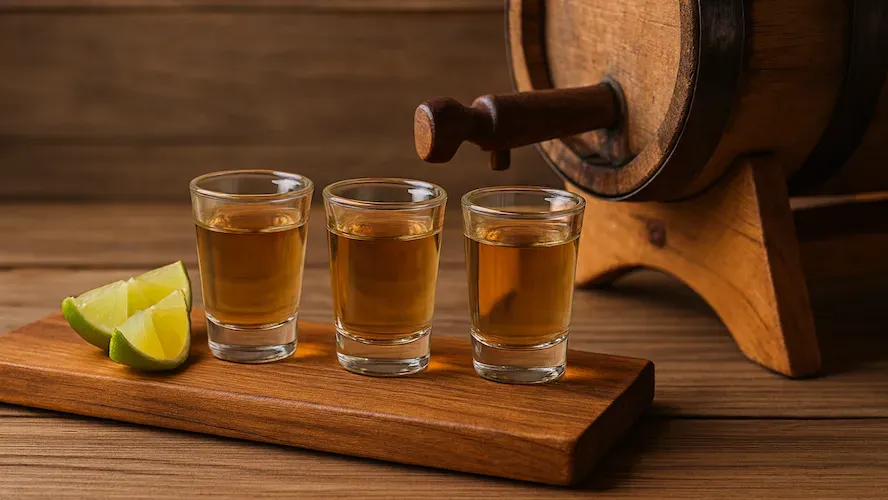
- The premiumization trend in the alcoholic beverages sector that pushes demand toward aged and artisanal variants, which are produced using traditional methods and matured in wooden barrels to develop complex flavor profiles (MDPI).
Industry and brand communications, from Diageo’s positioning of Ypióca as a premium cachaça to Novo Fogo’s barrel-aged, terroir-driven range, underscore how aged and small-batch cachaça is migrating out of the “cheap mixer” slot into sipping and connoisseur spaces (Diageo)
1.2. The Structural Barrier: Domestic Dominance and Minimal Export
Despite the global growth potential, the cachaça industry is overwhelmingly characterized by its domestic focus. Approximately 98% of all cachaça produced worldwide is consumed within Brazil. At roughly 86 million 9L cases, cachaça is the largest spirits category in Brazil. It is consumed across all demographic segments, from low-income informal settings to middle-class bars and high-end cocktail programs.
This extreme domestic concentration creates a critical structural barrier for global expansion. If almost 100% of the product remains in Brazil, the major industrial producers who control the vast majority of volume have minimal incentive to undertake the substantial investments required for high-cost export strategies. These strategies include adopting highly specific quality control measures, investing in sophisticated premium packaging, and funding international market introduction campaigns necessary to reposition the spirit outside of Brazil.
Consequently, the handful of small artisanal producers aiming for export are left to single-handedly fund the global category education required to differentiate the high-quality product from the bulk commodity, creating an economic challenge for specialized firms (U.S. Food and Drug Administration).
In terms of export volume, only 9.21 million liters were exported in 2013, generating USD 16.59 million in revenue. European markets are significant recipients of this limited export volume, with Germany leading the list of top importers, accounting for 17.69% of volume, followed by the United States (11.43%) and Portugal (9.18%). While there has been incremental growth since then, these figures still illustrate how marginal exports are relative to total production (The Brazil Business).
1.3. Market Segmentation and Major Players
The Brazilian market is sharply divided between high-volume industrial production and low-volume premium output. Industrial cachaça accounts for roughly 70% of total production volume. These are the brands responsible for the low price point that often defines cachaça internationally, known colloquially as pinga.
The largest industrial powerhouses include:
- Companhia Müller de Bebidas (Pirassununga 51) with an 18% market share,
- Pitú with 15% (including the Caninha da Roça brand), and
- Indústrias Reunidas Tatuzinho Três Fazendas (Velho Barreiro) with 8%,
based on 2013 data aggregated by The Brazil Business and underlying Brazilian trade statistics.
In stark contrast, premium cachaça currently represents only about 2% of total category volume, but this small segment has demonstrated significant dynamism, with pre-pandemic volume CAGR estimates around +11% in IWSR and category-focused analyses.
Ypióca, owned by Diageo since 2012, is widely recognized as the leading premium cachaça brand in Brazil. Diageo’s fact sheet describes Ypióca as the leader in the premium segment, with around 8% share of the total cachaça category and a price point substantially above the category average.
This performance confirms that while small, the premium segment is viable, margin-rich, and high-growth.
2. The Artisanal Revolution: Production, Geography, and Quality Differentiation
2.1. Defining the Industrial vs. Artisanal Divide (The Quality Benchmark)
The fundamental difference between industrial and artisanal cachaça is rooted in methodology, which directly impacts quality and, consequently, export viability.
| Parameter | Industrial Cachaça (Basis for 'Pinga') | Artisanal Cachaça (Premium Segment) | Compliance / Quality Impact |
|---|---|---|---|
| Geographical Focus | São Paulo (High Volume) | Minas Gerais (High Registration/Craft) | Establishes Provenance and Terroir. |
| Sugarcane Harvesting | Machine-harvested | Hand-harvested, pressed within 24 hours | Ensures purity of raw material and freshness. |
| Fermentation Process | Artificial or selected yeasts (rapid fermentation) | Wild/Natural yeasts (14–24 hours) | Develops complex, natural flavor profile. |
| Distillation Method | Continuous column stills (high efficiency) | Copper pot stills (batch distillation) | Allows flavor retention and master control over character. |
| Quality Control Cut | Less stringent separation; high-yield focus | Strict 100% 'Heart' distillate separation | Minimizes harmful byproducts (Ethyl Carbamate, Methanol). |
| Aging Woods | Typically un-aged or short resting in oak/steel | Aged in native Brazilian woods (Umburana, Arariba, Jequitibá) | Creates unique flavor differentiation and premium appeal. |
Compare industrial vs artisanal cachaça production—harvesting, fermentation, distillation and aging—and see how each impacts quality, terroir and safety.
Industrial cachaça is produced for efficiency, using machine-harvested sugarcane, fast fermentation with artificial yeasts, and distillation in high-volume column stills. This process prioritizes yield over flavor purity.
Artisanal cachaça, conversely, relies on traditional, slow batch processing. Sugarcane is gathered by hand and must be pressed within 24 hours of harvest to prevent oxidation and microbial spoilage. Fermentation occurs slowly (14 to 24 hours) in open vats using wild yeasts.
This meticulous approach culminates in distillation in copper pot stills, where precise cuts are essential to isolate the “heart” of the spirit and remove undesirable fractions.
2.2. Geographic Concentration and Growth
The artisanal segment is characterized by a high degree of fragmentation. Older industry overviews estimate 30,000–40,000 producers, yet only ≈5,000 legally registered—a gap that highlights the informal, rural nature of much of the sector.
More recent data from Brazil’s Anuário da Cachaça, reported by Agência Brasil, indicate a surge in formalization:
- 1,225 new cachaça registrations in 2024,
- representing a 20.4% increase in the total number of registered products.
Geographically, the artisanal heartland is Minas Gerais, which leads the nation with 501 registered establishments dedicated to cachaça production. Along with Rio de Janeiro, these states account for over 50% of national artisanal production.
In contrast, São Paulo is the primary industrial production hub, though it ranks second in total brand registrations (676 brands), reflecting the dominance of large industrial players headquartered there.
This concentration of high-quality, craft production in states like Minas Gerais establishes a legitimate geographical provenance—or terroir—that is vital for premium export marketing. It allows exporters to position cachaça in parallel with regionally anchored categories like Scotch whisky or Cognac, rather than as an anonymous commodity spirit.
2.3. The Craft of Distillation and Aging: Terroir as the Ultimate Differentiator
The quality benchmark of artisanal production centers on distillation purity. High-quality cachaça must be composed exclusively of the “heart” of the distillate.
The rigorous separation of the “heads” and “tails” fractions—which contain unsafe or undesirable compounds—is time-consuming and reduces yield, contributing significantly to the price difference between industrial and artisanal products.
Beyond distillation, artisanal producers leverage aging as a primary value-add. While global spirits often rely almost exclusively on American or European oak, cachaça producers possess a unique advantage: the use of native Brazilian wood barrels such as Umburana (Brazilian teak/cherry), Balsam, and Araribá, in addition to oak.
Aging in these woods develops complex, distinctive flavor profiles that cannot be replicated by competitors like whisky or conventional rum, as illustrated in specialist reviews of brands such as Novo Fogo Tanager and Germana’s wood-aged expressions.
A strategic conclusion arises from this fact: to compete with globally established categories, the marketing emphasis must pivot to “Brazilian Wood Terroir.” This highlights the indigenous, distinct flavor advantage that elevates artisanal cachaça beyond being merely an “aged spirit” and positions it as a specialized, origin-driven experience for discerning consumers.
3. Quality Control and Regulatory Challenges for European Access
3.1. The Critical Barrier: Ethyl Carbamate (EC) Compliance
Safety and regulatory compliance present the most tangible hurdles for high-quality cachaça entering Europe, specifically regarding Ethyl Carbamate (EC). EC is a widespread contaminant in fermented foods and alcoholic beverages and is classified as a Group 2A carcinogen by the International Agency for Research on Cancer (ScienceDirect).
International regulatory environments vary:
- The Brazilian allowable limit for distilled spirits is 210 μg/L
- The United States, which is a major importer, enforces a stricter guideline of around 125 μg/L for distilled spirits.
- The European Union has historically approved limits up to 1,000 μg/L for high-risk distilled stone-fruit beverages, such as certain fruit brandies, reflecting a focus on categories with intrinsically higher precursor loads.
Although cachaça itself is not a stone-fruit spirit, artisanal producers aiming at Europe must nonetheless operate well below these maxima to build trust with regulators, trade partners, and consumers.
To overcome the persistent stigma that cachaça is an unsafe, low-quality spirit, a perception inherited from low-cost industrial products and historical contamination issues, artisanal producers must transform regulatory compliance from a cost of doing business into a core marketing asset. Studies of EC in cachaça show that a significant share of samples historically exceeded Brazilian legal thresholds, particularly among poorly controlled small producers (SciELO).
By aggressively marketing verifiable chemical purity, e.g., demonstrating EC levels significantly below the Brazilian standard and aligning with the stricter US benchmark of 125 μg/L, premium brands can establish unambiguous safety leadership. This strategy directly counters European consumer concerns regarding the integrity of imported “exotic” spirits and positions certified artisanal cachaça alongside rigorously controlled categories such as Scotch or Cognac.
3.2. Other Quality Parameters and Production Controls
High-quality production necessitates stringent control over multiple factors, including raw material selection, specific yeast strains, acidity, and contaminants.
Beyond EC, several compounds, such as furfural and hydroxymethylfurfural (HMF), can negatively impact the final product’s sensory quality and may serve as proxies for overheating or poor distillation management. Yet Brazilian legislation does not currently establish specific legal limits for these markers in cachaça.
Premium producers must therefore self-regulate these compounds to achieve and maintain top-tier status, investing in:
- Better control of fermentation temperature and pH,
- Optimized distillation regimes (especially in pot stills),
- Careful barrel management (to avoid excessive thermal stress and degradation products).
The choice of wood cask type and the duration of the aging process are also vital for enhancing quality, flavor complexity, and the formation of desirable phenolic compounds.
Furthermore, modern European consumers increasingly demand sustainably produced spirits. Brands like Novo Fogo, which emphasize organic agriculture, carbon-negative operations, and the recycling of by-products, illustrate how sustainability can become a core brand pillar in export positioning (the-ethos.co).
Artisanal producers who adopt practices such as using vinasse for fertigation or yeast biomass for animal feed position themselves squarely within this sustainability narrative.
European import regulations also require adherence to specific standards of bottle size and labelling under the EU’s spirit drinks framework. Regulation (EC) No 110/2008 defines and classifies spirit categories (including sugarcane spirits), while EU standards of fill, summarized by the US TTB for exporters, converge on 70cl as the standard spirits bottle size in most EU markets.
Compliance with these standards is essential for smooth market entry, duty calculation, and consistent retail placement.
4. Strategic Take-Aways
1. Scale without export leverage
Cachaça is one of the world’s largest spirits categories, but 99% domestic consumption means that industrial incumbents have little structural incentive to finance global category building.
For new entrants, this creates both a challenge (limited existing awareness) and an opportunity (a “white space” for differentiated, terroir-driven positioning).
2. Premiumization is real but under-developed
Despite representing only ≈2% of volume, premium cachaça is growing at mid-single to low-double digit CAGRs and commands significantly higher price points and margins.
Diageo’s long-term commitment to Ypióca, as well as regional premium brands like Germana and Novo Fogo in Europe and North America, validates the international viability of high-quality, story-rich cachaça propositions.
3. Terroir and Brazilian woods are the unique advantage
The industrial vs. artisanal divide is not merely romantic storytelling; it is grounded in material differences in agriculture, fermentation, distillation, and wood management that are documented in technical literature and sensory analyses.
By explicitly framing cachaça around Brazilian wood terroir and origin-linked production (Minas Gerais, Rio de Janeiro, southern Atlantic rainforest), exporters can escape the “cheap rum substitute” trap and compete directly with other premium, terroir-driven spirits.
4. Regulatory compliance can be turned into a brand asset
EC and other contaminants are not just technical footnotes; they are central to the risk perception European regulators and consumers have toward imported sugarcane spirits.
Brands that can prove EC levels far below Brazilian limits (210 μg/L) and aligned with stricter US guidance (125 μg/L), while also self-regulating furfural/HMF and demonstrating sustainable production, can position themselves as safety and quality leaders rather than latecomers.
5. Category education must be collective, not individual
Historical experience—from Novo Fogo’s 2017 European push to ongoing boutique distribution of Germana and other artisan brands—shows that isolated efforts struggle to carry the full burden of category education.
For sustainable export growth, clustered initiatives (regional consortia, joint promotional campaigns, shared quality seals) will likely be required to spread marketing and compliance costs across multiple producers while building a coherent, premium image of cachaça abroad.